



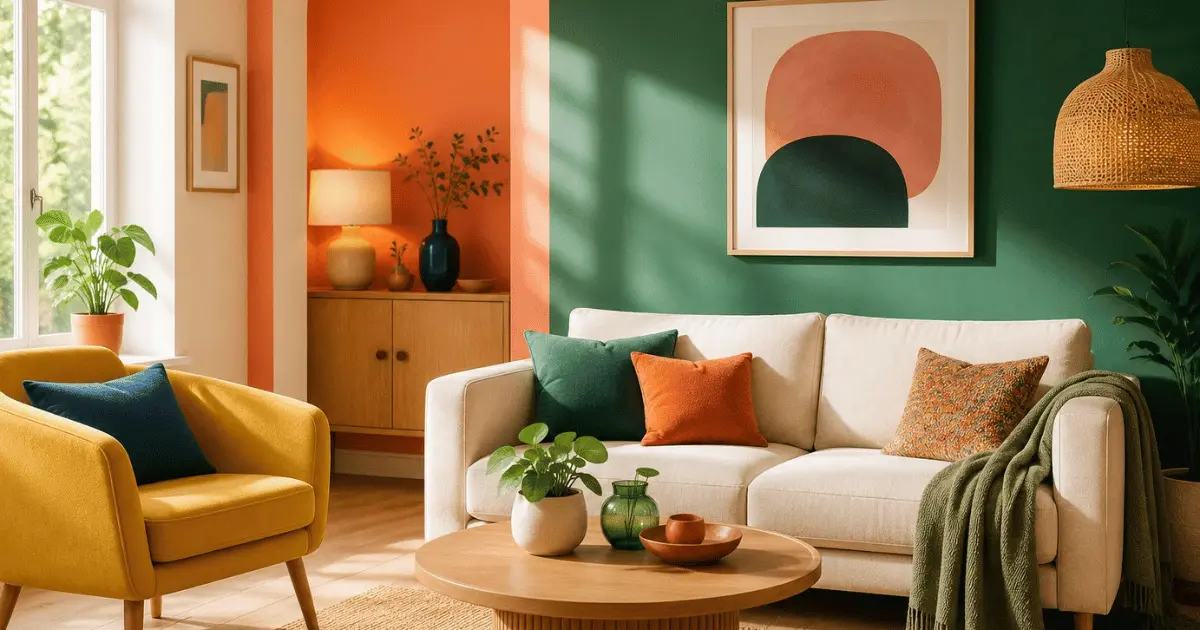
A full room repaint takes a weekend, a ladder, and a decent budget. Most of the 15 ideas below take under an hour — and several cost nothing because they rework things you already own.
This list collects creative color ideas for home decor that work whether you rent or own, love bold hues or prefer quiet ones. Each entry tells you what it is, why it works, and the fastest way to try it.
Start with the low-effort wins (pillows, throws, vases), then graduate to the bigger statements (feature walls, murals) once you know which colors your room actually likes.
Quick answer: The three highest-impact moves are a peel-and-stick wallpaper feature wall (renter-safe, removable), a single painted accent wall, and a coordinated swap of pillow covers and a throw. All three change a room’s whole color story in one afternoon — list updated August 2026.
| Rank | Idea | Effort | Best for |
|---|---|---|---|
| 1 | Wall art | Low | Instant personality, zero commitment |
| 2 | Peel-and-stick wallpaper | Medium | Renters who want a feature wall |
| 3 | Accent-wall paint | Medium | Biggest payoff per can of paint |
| 9 | Pillow covers | Very low | Seasonal refreshes on a budget |
| 15 | Murals, decals & stencils | High | One-of-a-kind statement rooms |
1. Set the Mood Fast With Bold Wall Art
A few well-chosen prints or canvases add color and personality without touching a paintbrush. Vibrant abstract pieces bring in strong hues; muted botanical prints add subtle pops. A gallery collage of mixed frame sizes gives you a whole palette on one wall.
Why try it: art is the only color move on this list you can rearrange, swap between rooms, or take with you when you move.
2. Create a Feature Wall With Peel-and-Stick Wallpaper
Wallpaper has quietly become the renter’s best friend. Peel-and-stick versions install with a squeegee and remove cleanly when you’re ready for a change — no paste, no damage deposit drama. Patterns run from classic florals to bold geometrics and textured looks that read as fabric or grasscloth.
Wallpaper one wall behind the bed or sofa rather than the whole room: the pattern stays a feature instead of becoming noise. Why try it: a dramatic statement without paint or reupholstering — and fully reversible.
3. Repaint One Wall for the Biggest Single-Color Payoff
Paint is still the cheapest square-foot price for color. One standout accent wall makes a statement; a softer version of the same shade on the remaining walls adds depth. If you’re feeling brave, try color drenching — painting walls, trim, and even the ceiling in one saturated hue — a look that’s been everywhere in 2025–2026 interiors.
Why try it: a single quart of paint changes more visual real estate than any accessory can.
4. Give Tired Furniture a Colorful Second Life
Furniture is a color surface hiding in plain sight. Paint a thrifted dresser a glossy teal, slipcover a beige sofa in rust, or reupholster dining chair seats in a patterned fabric. Mixing colors across couches, chairs, and beds gives the room a collected, personal look instead of a showroom-set feel.
Why try it: upcycling one piece costs a fraction of replacing it — and nobody else will own the same one.
5. Drape Fabric Where Paint Can’t Go
Fabric adds color and texture in one move. Hang it as curtains, drape it over a bench, or stretch a favorite textile over a canvas frame for instant oversized art. Lightweight cottons feel airy; velvets add saturated, light-catching depth. Choose durable, washable materials so the investment lasts.
Why try it: it’s the most flexible color medium in the house — cut it, move it, layer it.
6. Anchor the Room With a Statement Rug
A rug sets the color foundation the rest of the room builds on. Bold patterns and bright hues make the floor the star; neutral tones anchor a room that’s already busy. Washable rugs — now standard from most major rug brands — make saturated colors practical even with kids and pets.
Measure before you buy: in living rooms, at least the front legs of your seating should sit on the rug. Why try it: one rug can pull every other color in the room into a scheme.
7. Frame Your Windows With Contrasting Curtains
Curtains occupy floor-to-ceiling visual space, so a color change here reads instantly. Pick shades that contrast with the walls — ochre panels against sage walls, navy against warm white — and the whole room gains structure. Patterned curtains add interest; clean-lined neutrals calm a colorful room down.
Why try it: curtains transform a room in ten minutes, and swapping them back is just as fast.
8. Swap Lampshades for Instant Ambient Color
Lampshades color a room twice: once as an object, and again in the tinted glow they cast at night. Match shades to your wall art or rug for a cohesive look, or mix hues for an eclectic feel. Pleated and textured shades — big again in 2026 — add dimension even in a single color.
Why try it: it’s the cheapest lighting upgrade there is, and the effect changes with every bulb you pair it with.
9. Layer Pillows for a Low-Cost Color Refresh
Decorative pillows are the classic color entry point for a reason. Buy covers rather than whole pillows and you can re-theme a sofa for the price of a takeout dinner — store the off-season covers flat in a drawer. Mix sizes, textures, and two or three coordinating patterns for a designed-not-decorated look.
Why try it: lowest cost, lowest commitment, fastest visible change on this list.
10. Warm Up Any Seat With a Throw Blanket
A throw draped over a couch arm or chair back adds a stripe of color exactly where the eye lands. Choose a bold pattern or vivid hue for contrast, or a chunky knit in a tone-on-tone shade for texture. Throws also flex by season — linen in summer, wool in winter.
Why try it: it’s decor you can actually use on movie night.
11. Scatter Color With Objects You Already Own
Ceramic mugs, figurines, travel finds, and colorful books make surprisingly effective decor. Group similar objects in odd numbers on shelves and mantels, and cluster by color family so collections read as intentional rather than cluttered. Rotating pieces seasonally keeps shelves feeling fresh for free.
Why try it: zero cost, maximum personality — your shelves become a story about you.
12. Use Vases as Movable Pops of Color
Vases work with or without flowers in them. Go bold with a large statement vase in a saturated glaze, or group small bud vases in related tones. Ribbed and sculptural ceramic shapes add texture that catches light differently through the day.
Why try it: a vase is a color accent you can move to whichever room needs it this week.
13. Bring Rooms Alive With Fresh or Dried Flowers
Nothing adds color like something alive. Cut bouquets freshen a room instantly; potted plants add green that lasts; dried arrangements — pampas, bunny tails, preserved eucalyptus — give a rustic palette that needs zero maintenance. Hang wall baskets if surface space is tight.
Why try it: flowers add color, scent, and life in one gesture — no other decor does all three.
14. Add a Soft Glow With Colored Candles
Candles deliver quiet color: sculptural pillars in terracotta or sage, slim tapers in unexpected brights, or flameless LED versions where safety matters. Cluster different heights on a tray for a styled look, and match hues to the room’s accent color for cohesion.
Why try it: candles are the rare accent that improves a room whether lit or not.
15. Go Big With Murals, Decals, and Stencils
When you’re ready for a signature statement, walls offer more than flat paint. Removable mural panels turn a wall into scenery, decals add pattern without commitment, and a stenciled motif above a headboard or along a stair wall reads as custom work. Pick colors that echo your furniture and fabrics so the statement feels connected, not random.
Why try it: it’s the closest thing to a bespoke interior you can do yourself in a weekend.
How to Choose Creative Color Ideas for Home Decor That Actually Work
Before buying anything, use the classic 60-30-10 rule: about 60% of the room in a dominant color (walls, large furniture), 30% in a secondary color (curtains, rugs, an accent chair), and 10% in an accent (pillows, vases, art). It keeps bold choices from tipping into chaos.
- Test in your light. Tape paint swatches or fabric samples to the wall and watch them at morning, noon, and lamplight before committing.
- Repeat each accent color at least twice. A hue that appears once looks accidental; twice looks designed.
- Start reversible. Pillows, throws, and peel-and-stick before paint and upholstery — learn what you love cheaply.
- Mind undertones. Warm colors (terracotta, ochre, blush) mix best together, as do cool ones (sage, navy, slate) — crossing them works, but do it deliberately.
More Lists You’ll Like
- How to Refresh Your Bedroom Decor on a Budget
- 10 Tips for Decorating Small Interiors to Look Spacious
- Budget Living Room Ideas Under $500
FAQs About Adding Color to Home Decor
What is the cheapest way to add color to a room?
Rearranging what you already own costs nothing: group colorful books, mugs, and objects by color family on shelves. The cheapest purchases are pillow covers and a throw blanket, which recolor a sofa — the visual center of most living rooms — for less than almost any other decor buy.
How do I add color to a rental without losing my deposit?
Stick to fully reversible moves: peel-and-stick wallpaper, removable decals, tension-rod curtains, rugs, lampshades, and textiles. Peel-and-stick products remove cleanly from most painted walls when you follow the manufacturer’s removal steps. Save paint and permanent murals for a home you own.
What colors are trending in home decor in 2026?
Warm, earthy palettes dominate — terracotta, ochre, olive, and clay tones — alongside the color-drenching technique of painting walls, trim, and ceiling in one saturated hue. Trends aside, choose colors that repeat what’s already in your furniture and light; a trending shade that fights your room will always lose.
How many colors should one room have?
Three works for most rooms, split roughly 60-30-10: a dominant shade, a secondary, and an accent. You can add more once the base scheme holds together — vary texture and tone within a color family rather than piling on new hues. If a room feels chaotic, remove one color entirely and reassess.
Should every room in the house use the same color scheme?
No — but rooms that flow into each other should share at least one thread, like a repeated accent color or consistent trim shade. That thread makes the whole home feel intentional while letting each room have its own personality. Closed-door rooms like bedrooms and baths can go completely their own way.
Is bold color a mistake in a small room?
Not at all. A deep, saturated color can make a small room feel deliberate and cozy rather than cramped — small powder rooms and reading nooks often look best dramatic. The real small-room mistakes are too many competing colors and heavy pattern on every surface. Pick one bold move and let it star.