



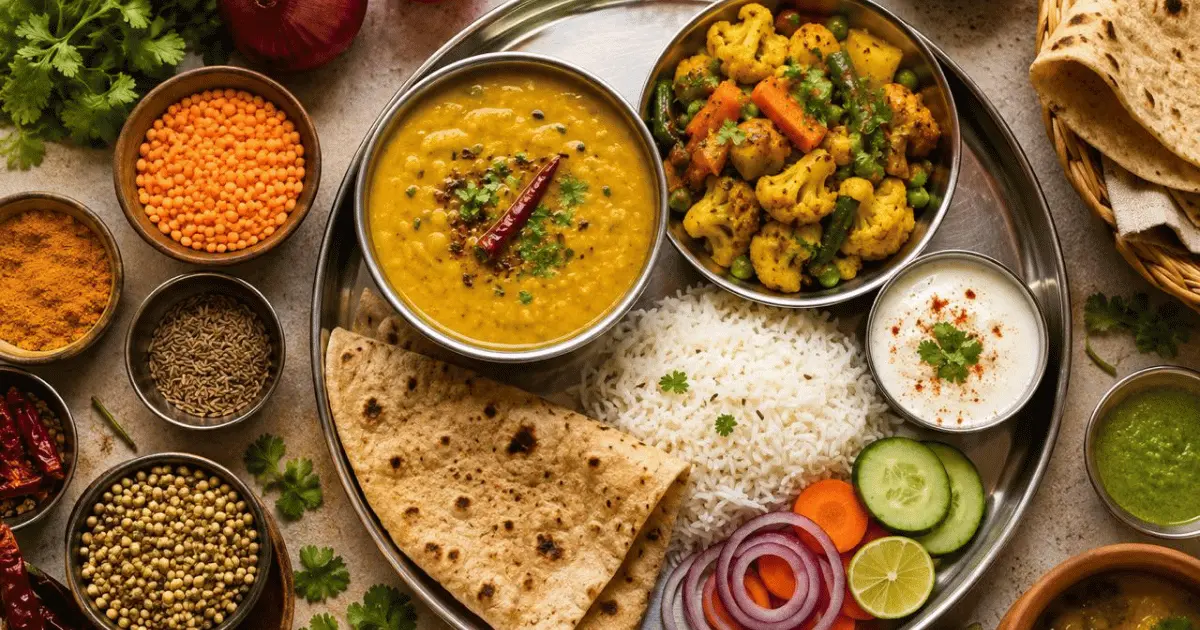
Ask anyone outside India to describe Indian food and you’ll hear “butter chicken and naan.” But that’s restaurant-menu India. The everyday home version — dal, sabzi, roti, dahi, rice — is one of the most plant-forward, fiber-rich ways of eating anywhere in the world.
So here’s why Indian food is healthy — 10 real reasons, from centuries of vegetarian protein wisdom to the spice rack scientists keep studying. We’ll also be honest about where Indian food can go wrong, because deep-fried anything is deep-fried anything.
A quick note: this article is general nutrition information, not medical advice. For a personal diet plan, talk to a doctor or registered dietitian.
Quick answer: Home-style Indian food is healthy because it’s built on lentils and legumes (plant protein and fiber), vegetables, whole grains like millets, fermented foods like dahi and idli, and spices such as turmeric and ginger that researchers continue to study for anti-inflammatory potential. The caveats: fried snacks, cream-heavy restaurant curries, and sweets are occasional foods — updated August 2026.
| # | Reason | Star examples | Main benefit |
|---|---|---|---|
| 1 | Huge variety of healthy options | Dal, tandoori, sabzi | No boredom, no burnout |
| 2 | A spice rack science studies | Turmeric, ginger, cumin | Flavor without excess salt/fat |
| 3 | Plant protein tradition | Dal, rajma, chana, paneer | Protein + fiber together |
| 4 | Cooked fresh from scratch | Home-ground masalas | Less ultra-processed food |
| 5 | Vegetables at the center | Palak, bhindi, gobi | Micronutrients, fewer calories |
| 6 | Whole grains and millets | Ragi, jowar, bajra, brown rice | Fiber and slow-release energy |
| 7 | Fermented foods | Dahi, idli, dosa, kanji | Gut-friendly probiotics |
| 8 | Fits almost any diet | Vegan dals, GF dosas | Easy to personalize |
| 9 | Healthy cooking methods | Tandoor, steaming, pressure cooking | Flavor without deep frying |
| 10 | Built-in balance (the thali) | Six tastes in one plate | Portion variety by design |
1. The Variety Means You Never Have to Eat “Diet Food”
Indian cuisine spans dozens of regional kitchens — Punjabi, Gujarati, South Indian, Bengali, Rajasthani — each with its own lighter staples. That variety is itself a health feature: you can eat differently every day of the month without touching a fried snack.
A simple dal-sabzi-roti-dahi plate covers protein, fiber, vegetables, and probiotics in one sitting. Why it matters: diets fail from boredom; a cuisine with hundreds of everyday dishes doesn’t get boring.
2. The Spice Rack Is a Research Subject, Not Just a Flavor Kit
Turmeric, ginger, cumin, coriander, and garlic do more than season — they let Indian food taste rich without leaning on excess salt, sugar, or fat. Turmeric’s active compound, curcumin, has been widely studied for anti-inflammatory and antioxidant properties, though the US NCCIH notes (2026) that evidence isn’t yet conclusive for specific health conditions and that curcumin is poorly absorbed on its own.
Interestingly, research reviews note black pepper’s piperine significantly improves curcumin absorption — and Indian cooking has paired the two for centuries. Why it matters: flavorful food you enjoy is food you stick with; potential bonus benefits are exactly that — a bonus, not a cure.
3. It Solved Plant Protein Centuries Before It Was Trendy
While the West discovers plant protein, India has been running on it for generations: dals of every color, rajma, chana, moong, and paneer. Lentils and legumes deliver protein along with fiber, iron, and magnesium — a package no protein shake matches.
The classic dal-chawal or rajma-rice pairing also combines cereal and legume proteins so their amino acids complement each other. Add dahi and you’ve layered in more protein still. Why it matters: affordable, complete plant protein is the hardest part of vegetarian eating — Indian food ships it as the default.
4. Home Cooking From Scratch Beats Ultra-Processed by Default
Traditional Indian cooking starts with whole ingredients: fresh vegetables, dried lentils, whole spices ground at home. There’s no ingredient label because there are no ingredients you can’t picture growing somewhere.
That matters because a diet built on minimally processed food naturally crowds out the packaged snacks and ready meals most modern diets drown in. Why it matters: what a cuisine doesn’t include is as important as what it does.
5. Vegetables Are the Main Event, Not the Side
In most Indian homes, the sabzi is the meal’s centerpiece: palak, bhindi, gobi, lauki, baingan, seasonal greens — cooked as dishes in their own right rather than steamed afterthoughts. Even meat dishes typically arrive alongside one or two vegetable preparations.
Eating this way makes hitting your daily vegetable intake almost automatic while keeping calories moderate. Why it matters: the easiest nutrition win is a cuisine that makes vegetables the thing you’d order anyway.
6. Whole Grains and the Great Millet Comeback
Beyond rice and wheat, India’s traditional grains are having a global moment: ragi, jowar, and bajra are fiber-rich, naturally gluten-free millets that fell out of fashion and are now firmly back — the UN even declared 2023 the International Year of Millets on India’s proposal.
Swapping some refined grains for millet rotis, ragi dosas, or jowar khichdi adds fiber and minerals with zero cuisine change. Why it matters: whole grains you already have recipes for are whole grains you’ll actually eat.
7. Fermented Foods Were Built Into the Menu All Along
Dahi with lunch, idli and dosa from naturally fermented rice-lentil batter, dhokla, kanji — fermentation runs right through Indian eating. Fermented dairy like dahi provides protein and calcium, and can contain live cultures similar to those in yogurts marketed as probiotic.
Fermentation can also make some nutrients easier to digest, which is part of why idli is a classic light meal. Why it matters: gut-friendly foods work best as everyday habits, and Indian meals include them by default rather than as supplements.
8. It Adapts to Almost Any Diet You’re Following
Vegetarian? A huge share of the traditional repertoire already is. Vegan? Most dals and sabzis need only a ghee-to-oil swap. Avoiding gluten? Rice, dosas, idlis, and millet rotis are naturally wheat-free — though regular rotis, naan, and anything battered in wheat flour are not, so check preparation if you have celiac disease.
Watching weight? Choose tandoori and dal-based dishes over cream gravies, and grilled over fried. Why it matters: a cuisine you can bend to your needs beats a rigid diet plan every time.
9. Traditional Cooking Methods Do Flavor Without Deep Frying
The tandoor chars meat, paneer, and vegetables with little added fat. Steaming gives you idli and dhokla. Pressure cooking — the great Indian kitchen constant — cooks dals and vegetables quickly. Marinades of dahi and spices build flavor before the food ever meets heat.
On ghee: it’s traditional and flavorful, but it is still mostly saturated fat — standard dietary guidance says use it in moderation like any other fat, not as a health food. Why it matters: technique lets Indian food be indulgent-tasting at everyday-food calorie levels.
10. The Thali Is Portion Balance, Designed Centuries Ago
A traditional thali is a lesson in balance: small portions of many things — dal, sabzi, grain, dahi, salad, pickle — instead of one giant plate of one thing. Ayurvedic tradition frames this as balancing six tastes (sweet, sour, salty, bitter, pungent, astringent); modern nutrition would just call it dietary variety and built-in portion control.
Why it matters: variety in small portions is one of the few eating patterns both grandmothers and dietitians agree on.
Why Indian Food Is Healthy at Home — and Where It Goes Wrong
Honesty time: “Indian food” on a restaurant menu is not the same food this list describes. Cream-and-butter gravies, deep-fried starters like samosas and pakoras, refined-flour naan, and sweets like gulab jamun are celebration foods — delicious, and best kept occasional. Restaurant portions also tend to run heavy on oil and salt compared to home cooking.
The practical rule: eat like an Indian home kitchen, not an Indian restaurant menu. Dal, sabzi, whole-grain rotis or rice, dahi, and tandoori-style proteins as the everyday base; the fried and creamy classics as the treats they were always meant to be.
More Lists You’ll Like
- 11 foods that boost your mood fast — several are already in your masala dabba
- Healthy meal prep ideas in 30 minutes — dal and sabzi batch-cook beautifully
- Budget-friendly date ideas for couples — cooking a thali together counts
FAQs About Indian Food and Health
Is Indian food healthy for weight loss?
It can be, if you choose home-style dishes: dal, vegetable sabzis, tandoori proteins, dahi, and controlled portions of rice or roti are filling and moderate in calories thanks to their fiber and protein. What works against weight loss are fried snacks, cream-based gravies, and sweets — treat those as occasional foods, not daily ones.
Is turmeric really good for you?
Turmeric’s curcumin has shown anti-inflammatory and antioxidant activity in many studies, but the NCCIH says evidence isn’t yet conclusive for treating specific conditions, and curcumin absorbs poorly on its own — black pepper’s piperine improves this. Enjoy turmeric as everyday cooking, not medicine, and talk to a doctor before high-dose supplements.
Is Indian food gluten-free?
Much of it is, but not all. Rice dishes, most dals, dosas, idlis, and millet rotis are naturally wheat-free. However, regular rotis, naan, parathas, and anything battered or thickened with wheat flour contain gluten. If you have celiac disease, confirm ingredients and watch for shared cooking surfaces, especially in restaurants.
What are the healthiest Indian dishes to order?
Safe bets at most restaurants: dal (ask for less tadka oil), tandoori chicken or paneer, chana masala, vegetable curries without cream, plain dahi or raita, and steamed idlis with sambar. Choose roti over butter naan and skip the fried starters. At home, khichdi with vegetables is a one-pot classic that’s hard to beat.
Is ghee healthy or should I avoid it?
Ghee is traditional and adds real flavor, but nutritionally it’s still mostly saturated fat, so mainstream dietary guidance treats it like butter: fine in small amounts, not a health food to pour freely. A teaspoon on dal or rotis is a reasonable everyday use; deep-frying in it is not.
Is Indian food healthier than Western food?
That depends on which version of each you compare. Home-style Indian eating — legumes, vegetables, whole grains, fermented dairy — compares well against a fast-food-heavy Western diet. But a Mediterranean-style Western diet is also excellent, and restaurant Indian food loaded with cream and fried items isn’t healthy anywhere. Cooking method beats cuisine label.
Nutrition claims reference the NCCIH turmeric fact sheet and published research reviews; this is general information, not medical advice — verify personal dietary questions with a qualified professional.