



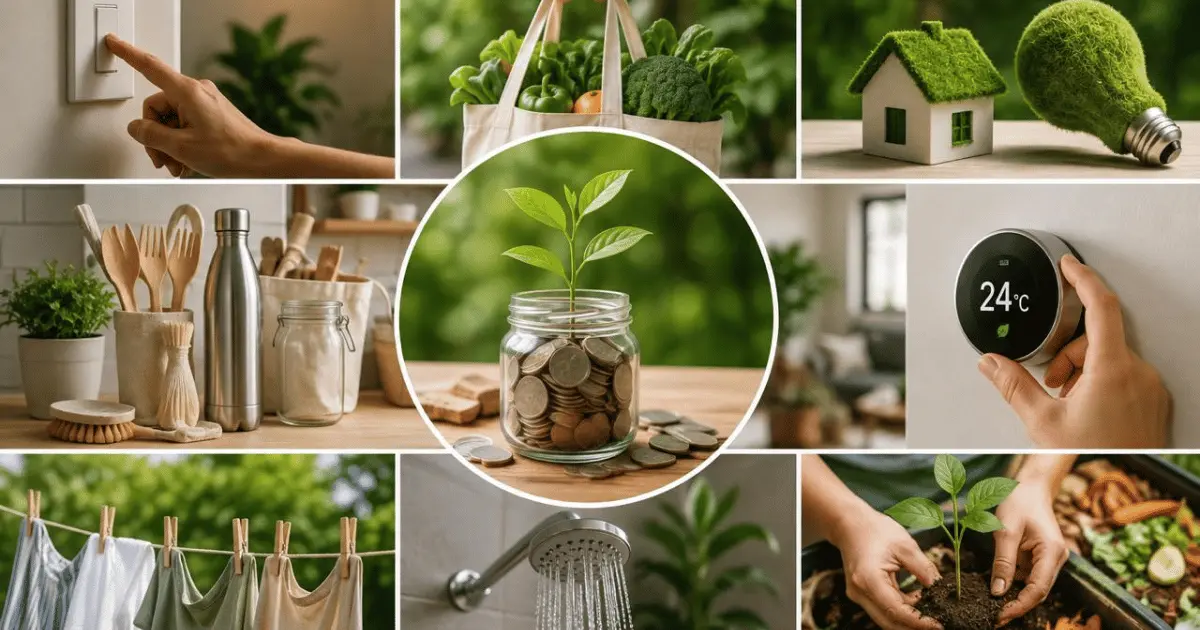
The average American uses about 82 gallons of water a day at home (EPA WaterSense, checked August 2026), and a typical family spends hundreds of dollars a year powering lights and appliances that could run for far less. The gap between your current footprint and a smaller one is mostly habit, not sacrifice.
These 13 eco-friendly lifestyle tips are ordered from easiest to most involved, and most of them save money as a side effect — LEDs, reusable bags, and shorter showers pay you back, not the other way around.
Start with two or three. Sustainability that survives is built the same way as any habit: gradually.
Quick answer: the three fastest wins are switching to LED bulbs (at least 75% less energy than incandescents, per the US Department of Energy), carrying reusable bags, and fixing water-wasting habits — together they cut both your footprint and your utility bills. Data checked and updated August 2026.
| Step | Effort | Impact |
|---|---|---|
| Switch to LED bulbs | One shopping trip | High — 75%+ less lighting energy |
| Use reusable bags | Near zero | Medium — less plastic waste |
| Cut water waste | Small habit changes | High — from ~82 gal/person/day |
| Go paperless | One afternoon of settings | Medium — ongoing paper savings |
| Recycle + compost properly | Weekly routine | High — less landfill waste |
| Drive less | Route planning | High — fewer emissions, fuel savings |
1. Learn the Basics So Your Choices Actually Matter
Ten minutes of reading beats a hundred well-intentioned guesses. Follow one or two credible environmental sources — the EPA and UN Environment Programme both publish plain-language guides — and learn where your personal footprint is actually biggest (usually home energy, transport, and food).
Why try: informed effort goes where it counts, instead of agonizing over straws while the water heater runs on 1990s settings.
2. Swap Every Bulb for an LED
LED bulbs use at least 75% less energy than incandescent lighting and last far longer, according to the US Department of Energy (checked August 2026). One shopping trip converts your whole home.
While you’re at it, look for the Energy Star label whenever an appliance needs replacing. Why try: this is the single easiest energy win in the house — a one-time change that pays you back every month.
3. Look Into Renewable Energy for Your Home
Rooftop solar has become mainstream in both the US and India, and government incentives can offset a meaningful share of the cost — check current federal, state, or national subsidy programs before you assume it’s out of budget.
Not ready for panels? Many utilities offer green-power plans that source your electricity from renewables for a small premium. Why try: it’s the largest single cut most households can make to their home-energy footprint.
4. Cut Your Water Use Without Feeling It
With the average American using about 82 gallons per day at home (EPA WaterSense, checked August 2026), small leaks and long showers add up fast. Shorten showers by two minutes, fix dripping taps, turn off the water while brushing, and install low-flow showerheads.
Outdoors, drought-tolerant plants keep a garden alive on a fraction of the water. Why try: most of these changes are invisible in daily life but visible on the water bill.
5. Kill the Standby Power Drain
Electronics sip electricity even when “off.” Unplug chargers and appliances you’re not using, or group them on a power strip you switch off at night. Air-dry laundry when weather allows, run the washing machine and dishwasher only with full loads, and wash clothes in cold water.
A programmable or smart thermostat trims heating and cooling — usually the biggest energy line item — automatically. Why try: these habits cost nothing and quietly shave your electricity bill every month.
6. Drive Less — Batch, Walk, or Share the Ride
Transport is one of the biggest chunks of a personal carbon footprint. You don’t need to sell the car: batch errands into one trip, walk or cycle anything under two kilometers, take public transport when it’s practical, and carpool for commutes.
Each avoided trip saves fuel money as well as emissions. Why try: fewer cold starts and short hops is the rare climate action that also declutters your week.
7. Go Paperless in One Afternoon
Switch bank statements, utility bills, and receipts to digital, opt out of catalog mailing lists, and scan documents instead of photocopying. Digital magazines and library e-books replace most household print.
Keep a “print only if signing” rule at home and work. Why try: one afternoon of account settings eliminates years of paper flowing through your mailbox and into the bin.
8. Choose Greener Products — Including Second-Hand
When you buy new, favor durable goods made from sustainable materials like bamboo, hemp, or organic cotton, and refill-friendly cleaning products. But the greenest product is usually the one that already exists: second-hand furniture, clothes, and electronics skip the manufacturing footprint entirely.
For food, organic and locally sourced options trim transport emissions. Why try: buying less, better, and used cuts waste at the source — where it matters most.
9. Keep Reusable Bags Where You’ll Actually Use Them
Plastic waste can take up to 1,000 years to decompose, according to the United Nations (checked August 2026) — and single-use bags are among the easiest plastics to simply not use.
The trick is logistics, not willpower: keep two bags in the car, one folded in your work bag, and one by the front door. Some stores even offer small discounts for bringing your own. Why try: it’s the lowest-effort habit on this list once the bags are positioned right.
10. Recycle Right — Contamination Ruins the Batch
Recycling only works when it’s done correctly. Check what your city or county actually accepts (rules vary widely), set up a dedicated bin at home, rinse containers before tossing them in, and keep non-recyclables out — one greasy pizza box can contaminate a load.
For electronics, batteries, and clothes, look for specialized local drop-off programs. Why try: ten minutes of learning your local rules turns feel-good recycling into recycling that actually gets recycled.
11. Compost Your Food Scraps
Food scraps sent to landfill are wasted twice — once as food, once as the garden nutrition they could have become. Start an outdoor bin or a compact indoor system, feed it fruit and vegetable scraps, yard trimmings, and plain paper, and keep it covered and occasionally stirred.
In a few months you get free, rich fertilizer for pots, beds, and lawns. Why try: composting shrinks your trash output noticeably and replaces store-bought fertilizer for nothing.
12. Grow Something You’d Otherwise Buy
You don’t need land — a balcony container of tomatoes, chillies, or herbs counts. Pick plants suited to your climate, use your own compost and mulch to hold moisture, and start with two or three pots rather than a full bed.
Every homegrown harvest skips packaging, transport, and refrigeration. Why try: fresher food, a lower footprint, and the small daily satisfaction of eating something you grew.
13. Buy From Local Farmers When You Can
Farmers’ markets and Community Supported Agriculture (CSA) programs shorten the distance from field to plate, which means fewer transport emissions and fresher, seasonal produce. You also learn exactly where your food comes from and how it was grown.
The money stays in your local economy and helps keep nearby farmland farmed. Why try: it’s one of the few eco choices where the “sacrifice” is tastier vegetables.
How to Choose Which Eco-Friendly Lifestyle Tips to Start With
Don’t attempt all 13 at once — pick by effort and payback:
- This week (near-zero effort): position reusable bags, switch statements to paperless, put idle electronics on a switchable power strip (steps 9, 7, 5).
- This month (one purchase or setup): replace remaining bulbs with LEDs, set up proper recycling, fix water-wasting habits and leaks (steps 2, 10, 4).
- This season (projects): start composting, plant a few containers, restructure one weekly car routine (steps 11, 12, 6).
- This year (investments): research renewable energy options and efficient appliance upgrades as replacements come due (step 3).
Layered this way, each tier funds and motivates the next — the LED and water savings literally pay toward the bigger upgrades.
More Lists You’ll Like
- Healthy meal prep ideas you can finish in 30 minutes
- 15 simple tips for managing your finances
- Budget-friendly date ideas for couples
FAQs About Living an Eco-Friendly Lifestyle
What is the easiest way to start an eco-friendly lifestyle?
Start with the changes that require a decision once instead of discipline daily: switch your bulbs to LEDs, set bills to paperless, and stash reusable bags in your car and by the door. None of these demand ongoing willpower, all of them save money, and early wins make the bigger steps feel achievable.
Does eco-friendly living actually save money?
Usually, yes. LEDs use at least 75% less energy than incandescent bulbs per the US Department of Energy, water-saving habits cut utility bills, driving less saves fuel, and buying second-hand or growing herbs costs less than buying new. The exceptions are up-front investments like solar, which pay back over years rather than months.
Which single change has the biggest environmental impact?
For most households it’s energy: how you power, heat, and cool your home, and how much you drive. Moving to renewable electricity (rooftop solar or a green utility plan) and cutting car trips generally outweigh smaller swaps like bags and straws — though the small swaps still matter and build the habit.
How much water does the average person use per day?
According to the EPA’s WaterSense program, the average American uses about 82 gallons of water per day at home, and the average family more than 300 gallons. Showers, toilets, and taps account for most of it — which is why low-flow fixtures, shorter showers, and fixing leaks are the highest-impact fixes.
Is composting worth it if I live in an apartment?
Yes — compact indoor systems like sealed countertop bins, bokashi buckets, or vermicomposting (worm bins) work in small kitchens without smell when maintained correctly. If you have no use for the finished compost, many cities and community gardens accept food-scrap drop-offs. Even partial composting meaningfully shrinks your weekly trash.
Why does recycling correctly matter so much?
Because contamination can send an entire batch of recyclables to landfill. Food residue, greasy boxes, plastic bags in the wrong stream, and “wish-cycled” items that your facility doesn’t accept all degrade the load. Ten minutes checking your local rules, plus rinsing containers, makes the difference between real recycling and expensive sorting theater.